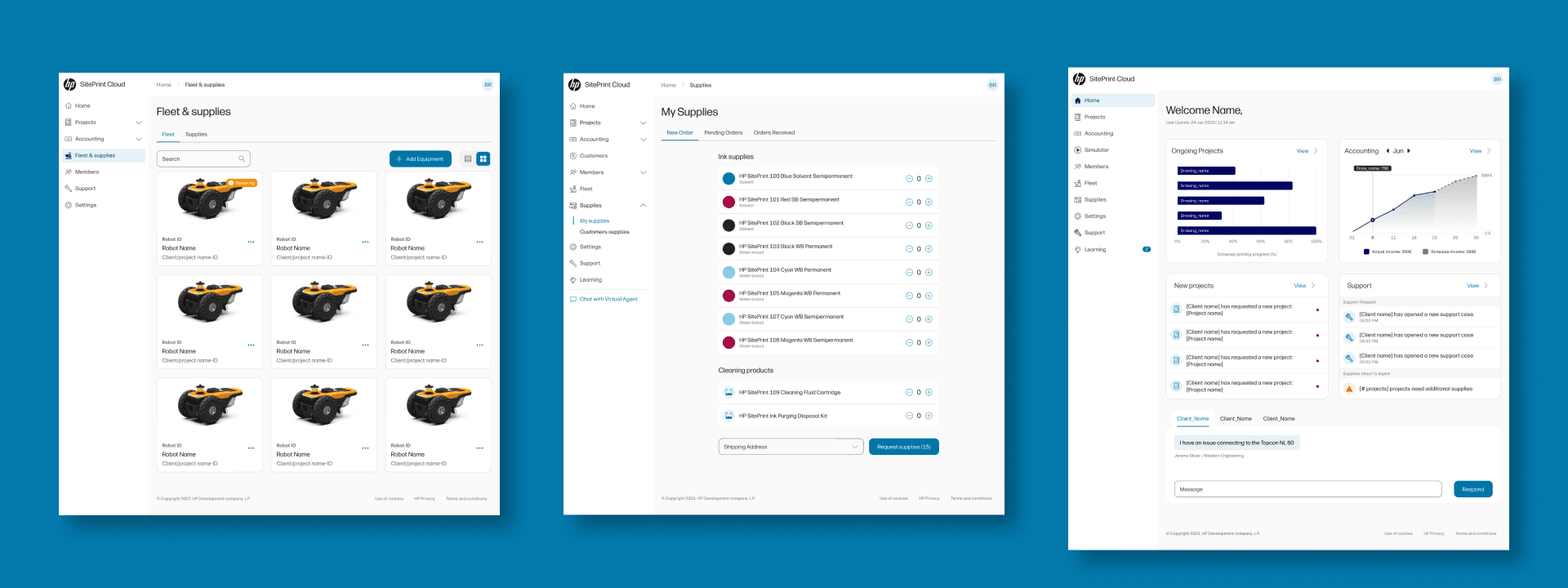
Nacar - HP
SitePrint Platform + Control panel
In this case study, an interaction designer navigated the complexities of big tech to create user-centered digital solutions for HP that balanced business goals with technological feasibility.
My role
↪ Interaction Designer
Internship
↪ 6 months
Design Team
↪ 2 IxD, 1 VD, 1 CX Lead
Design Tools
↪ Miro/Figma/Jira
Overview
Having the opportunity to work as a "consultant" for a Big Tech company, navigating through its complexities and challenges while being employed as a designer within a creative studio surrounded by diverse talents, is an experience this case study aims to capture. By bringing to life the insights and advice shared by each professor during the 2023 Interaction Design master's program, the designer hopes to shed light on this journey.
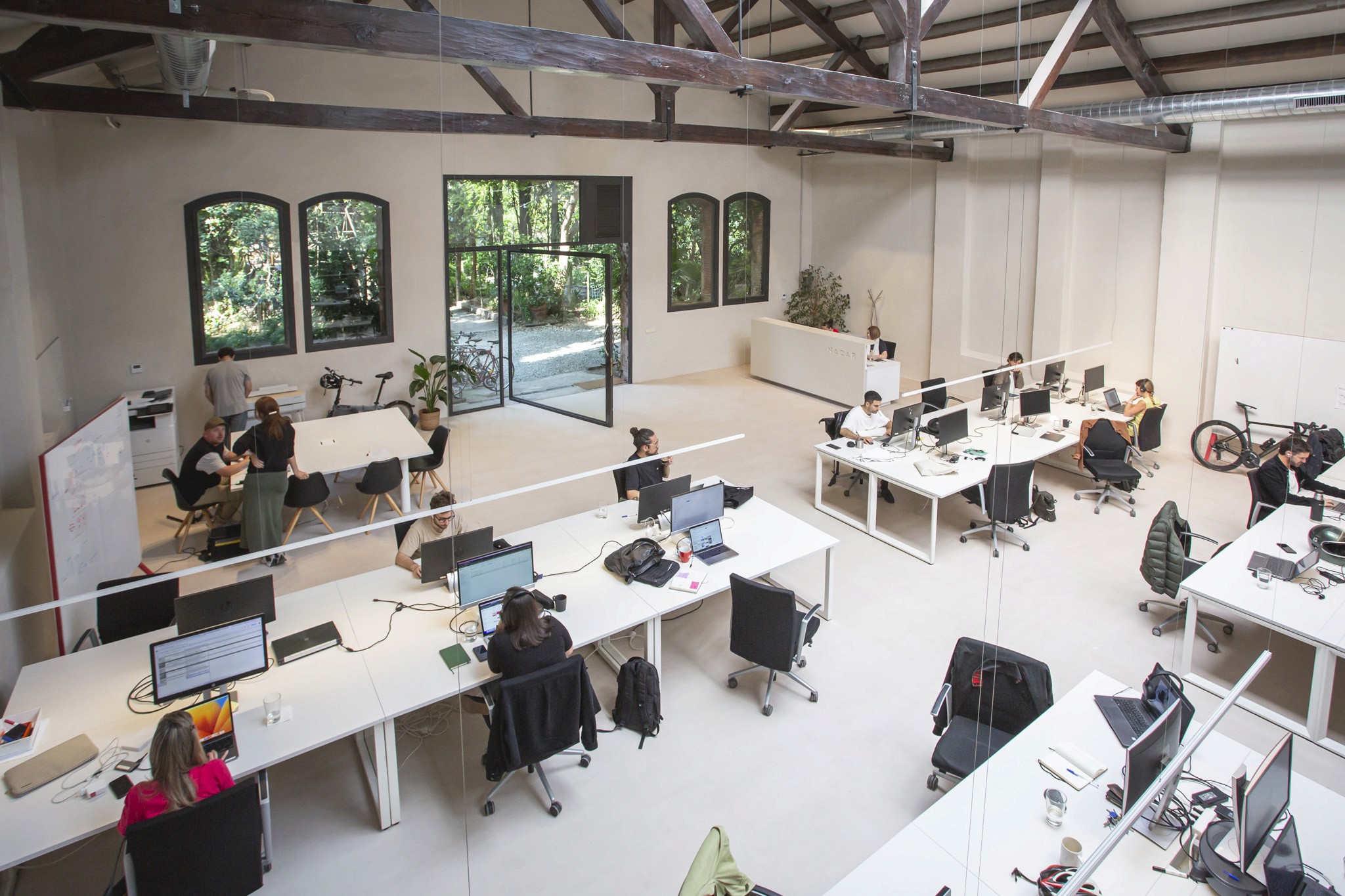
Nacar's Role as a Contractor
Nacar Design, a Catalan design studio, houses a multitude of creative minds including UX/UI designers, Visual designers, 3D designers, Motion designers, Industrial designers, and more. This diversity allows them to offer multidisciplinary design services to various clients such as Roche and HP.
HP as the Client
Hewlett Packard, a prominent Big Tech enterprise offering global solutions across industries, is the focus here. Specifically, the internship took place within the Solutions division, which caters to markets like construction. One of their offerings, HP Site Print, serves architects and operators, and it's the interaction designer's role to ensure these professionals have the best experience using HP's products and services as end users. This involves creating flows, information architectures, wireframes, wireflows, behaviors, documented screens, and more.
The designer's goal was an in-depth understanding of CX Lead's requirements. This led to the creation of user-friendly digital solutions that were achievable within the development scope and aligned with HP's business model vision.
The Dream Team
The teams are structured as development cells and are formed with interdisciplinary disciplines that are tailored to the scope of each project.
CX Lead
IxD Designer
Visual Designer
Proj. Manager
Dev. Lead
Front-end Dev.
Back-end Dev.
Tools and Technologies
Everyone is free to use any tool they want. However, the documentation of the entire process is organized into 3 main tools:

Miro

Figma

Jira
HP Site Print
→ The Service
HP Site Print caters to the construction field, where a robot under an operator's guidance prints architectural plans on the ground, indicating element placement such as walls, doors, and windows. This service encompasses two primary interfaces:
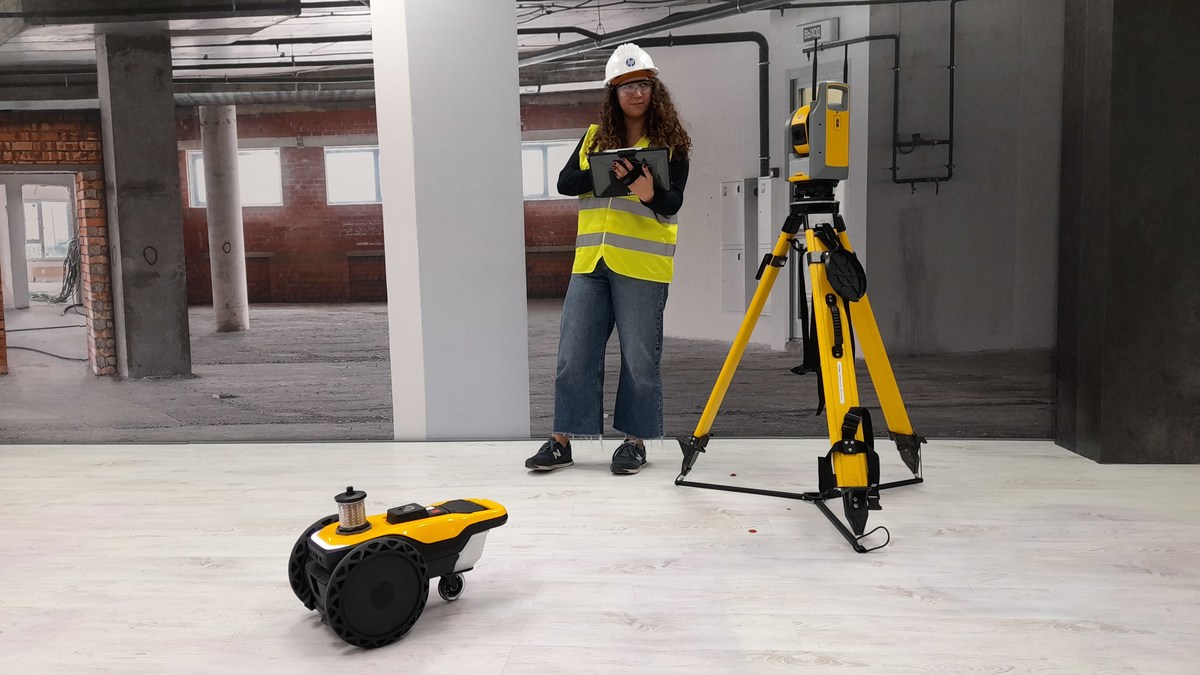
Control Panel
→ Robot Controller
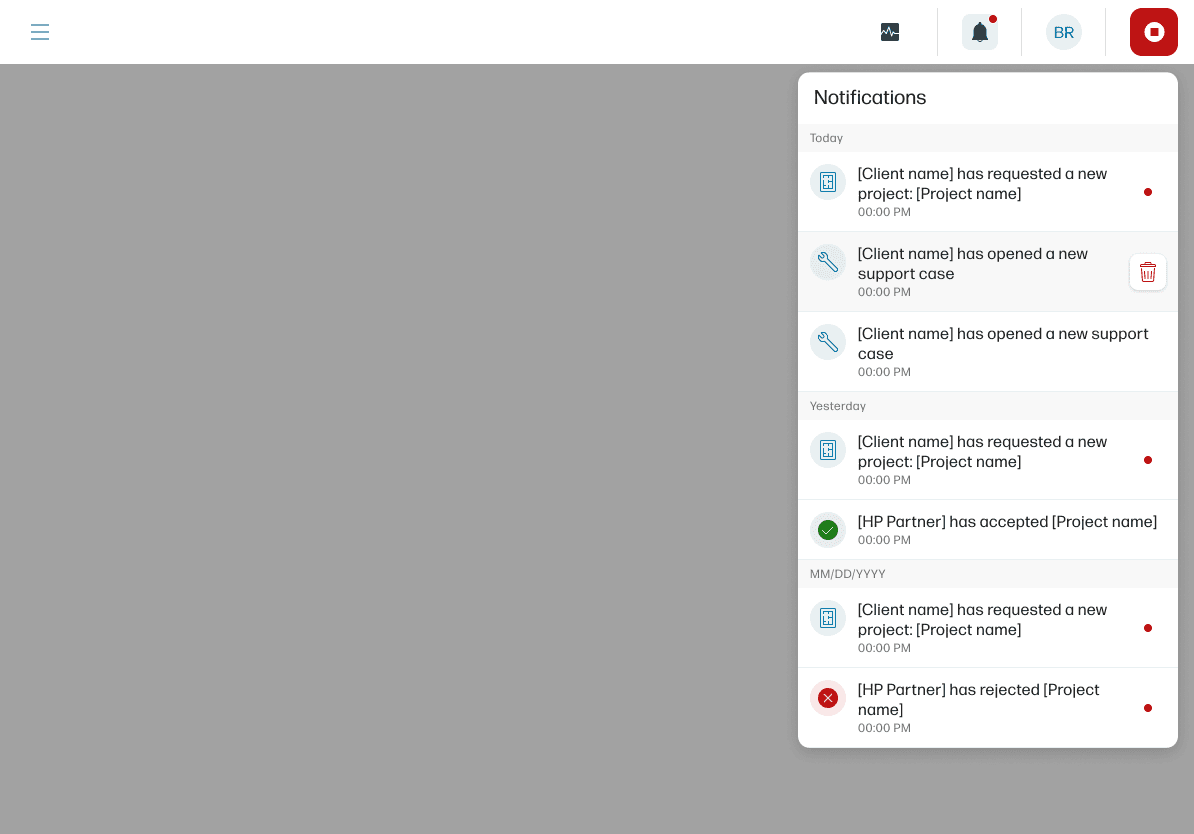
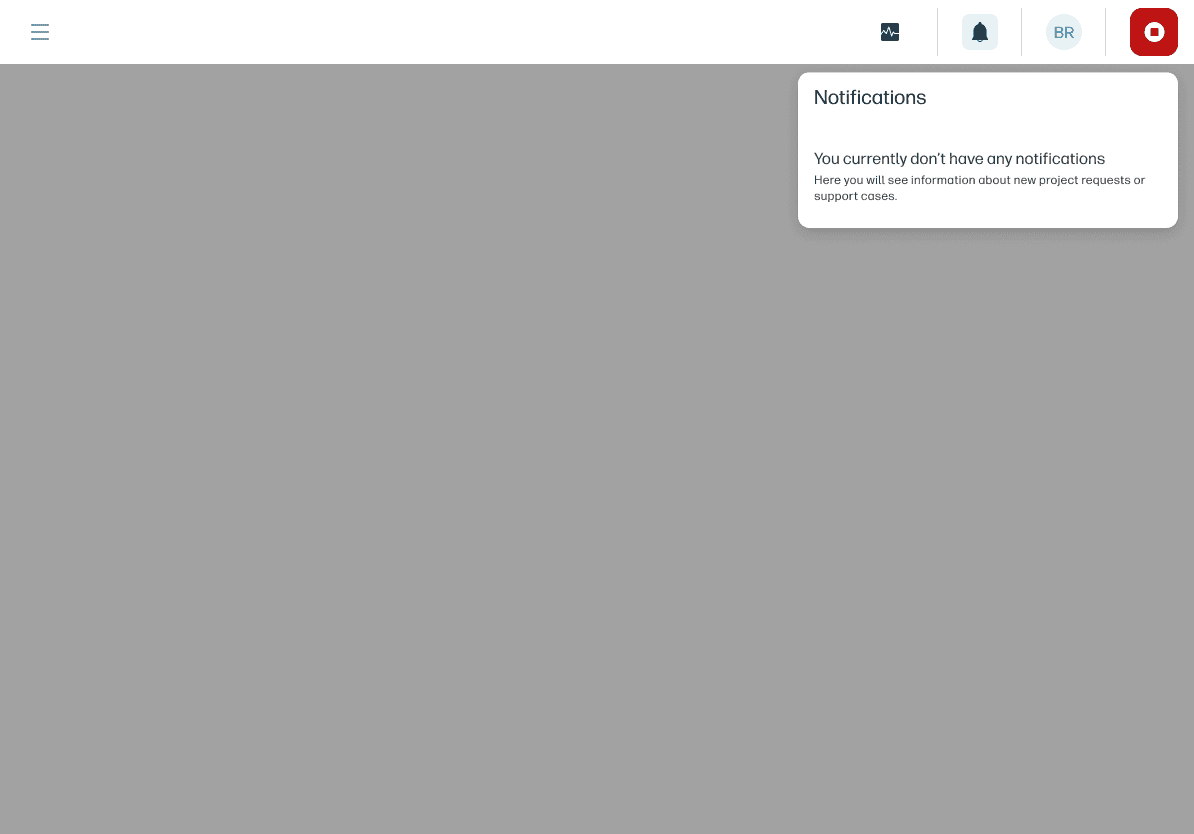
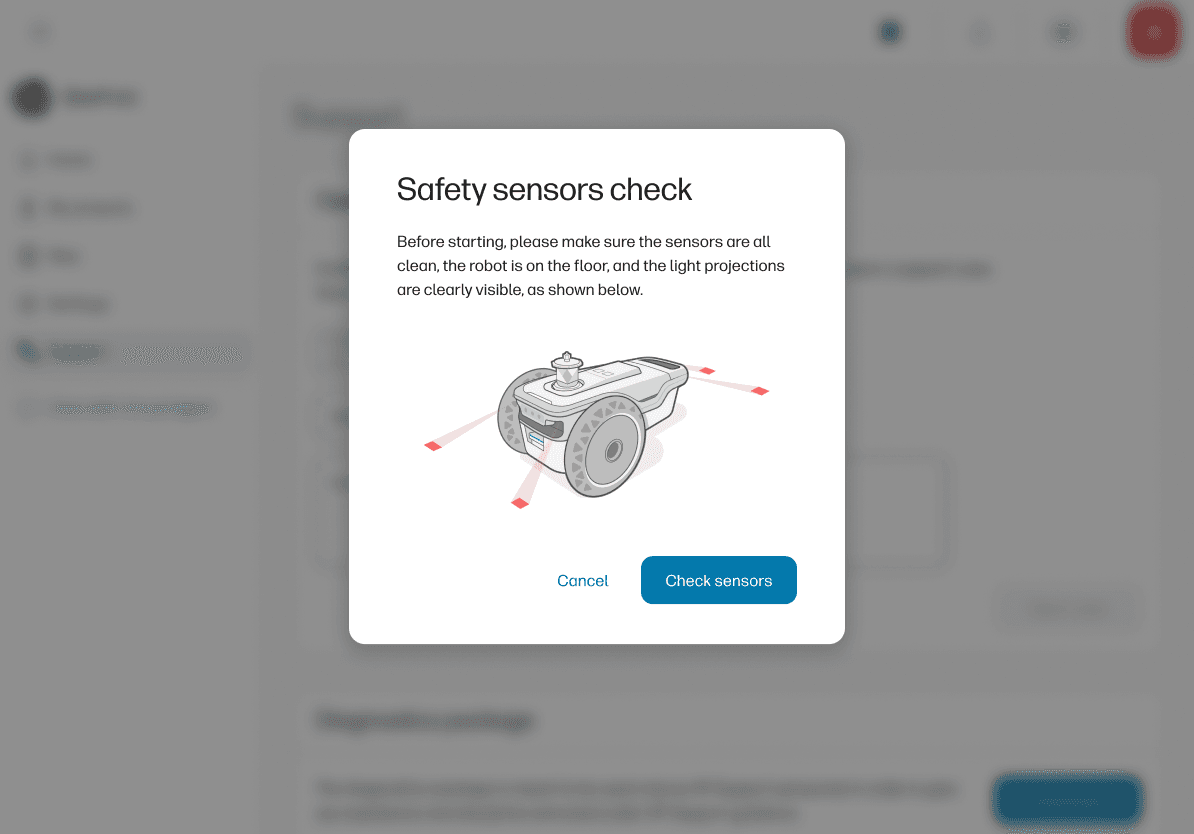
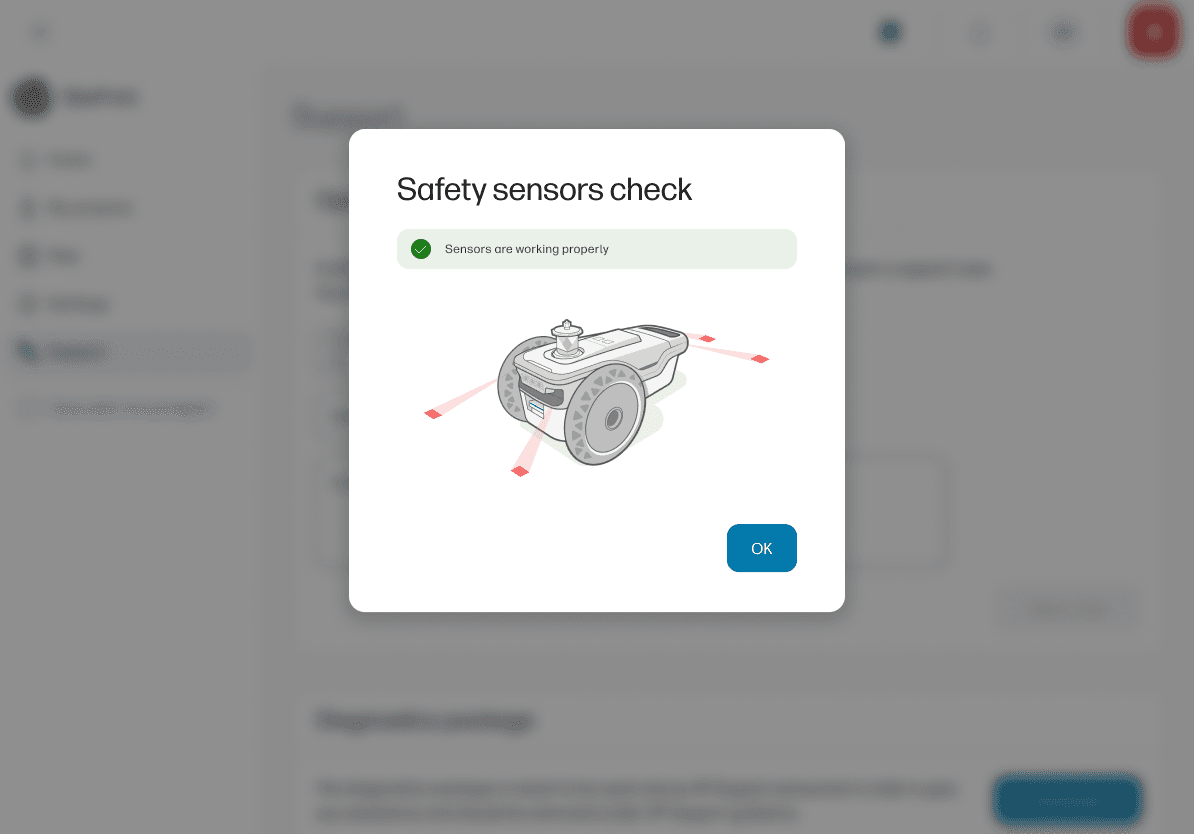
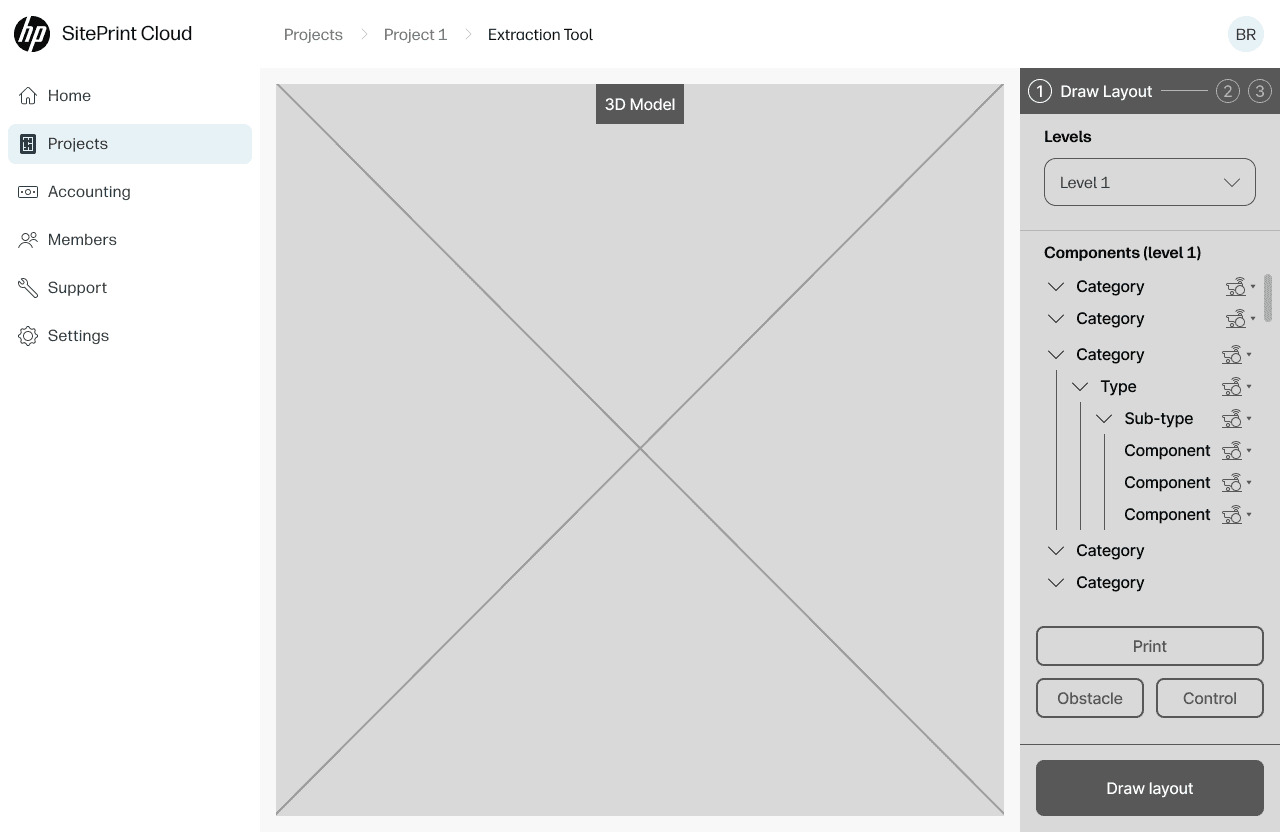
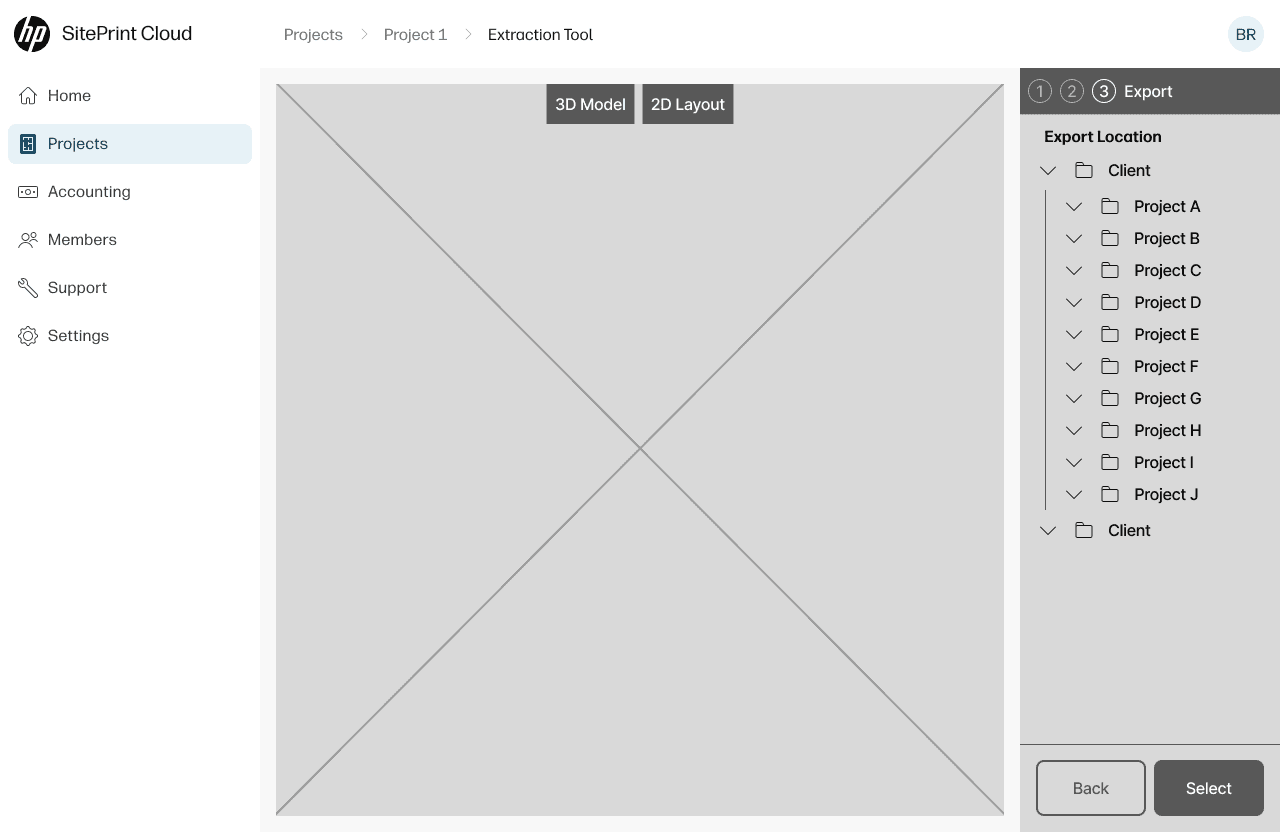
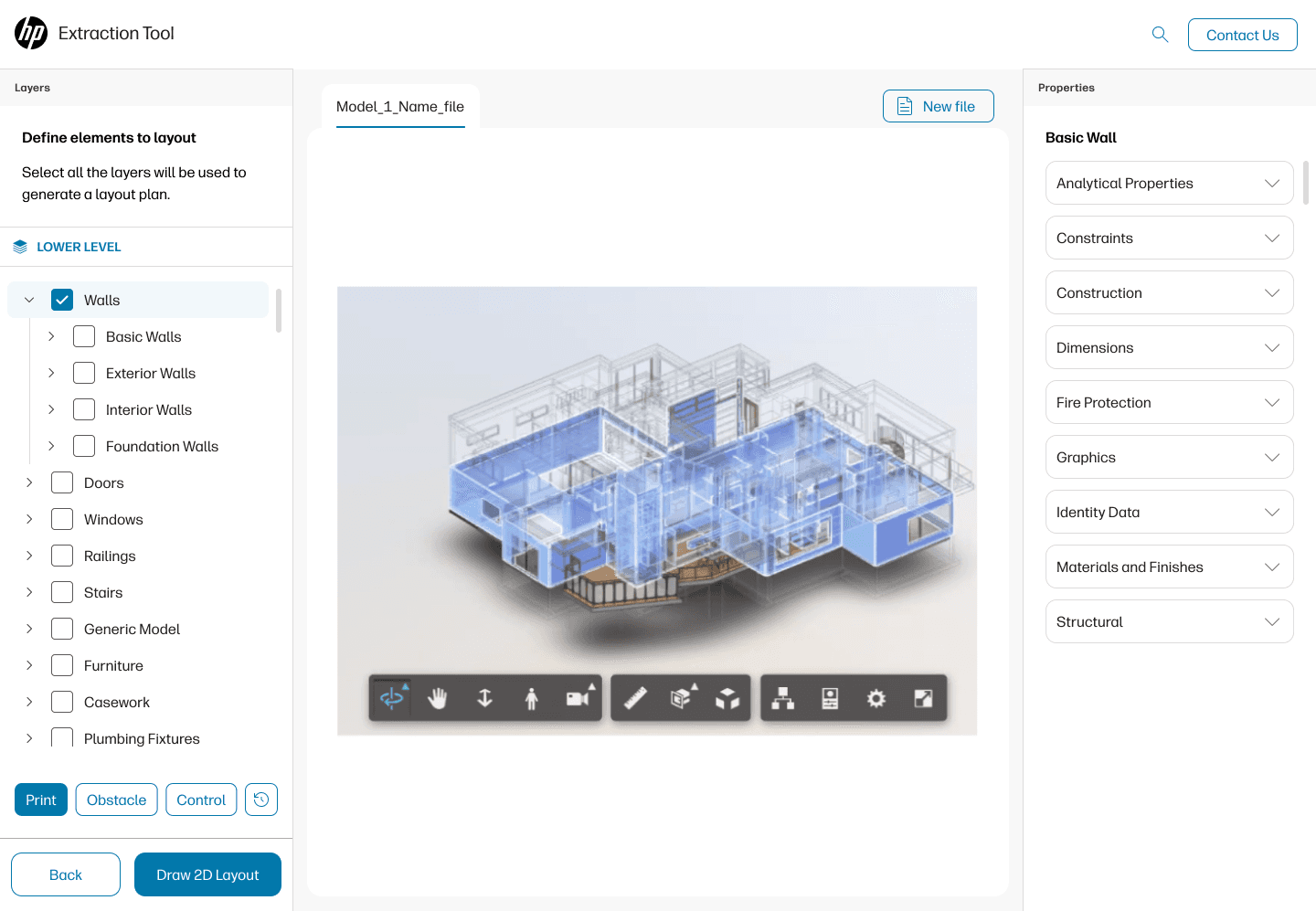
For the control panel, the primary interface overseeing the construction-site robot, various features were designed. These include notification systems, sensors check, and layer editor flow.
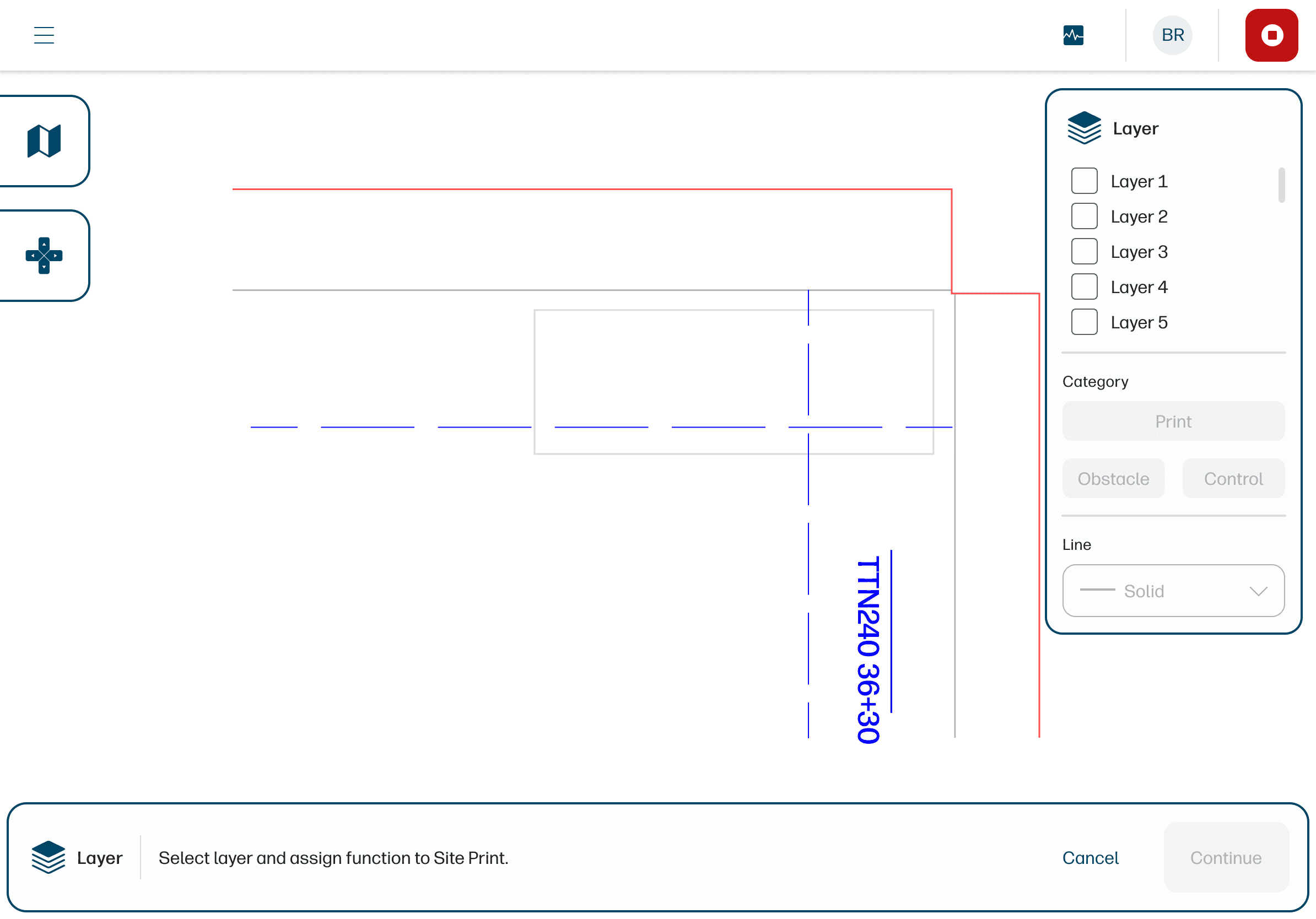
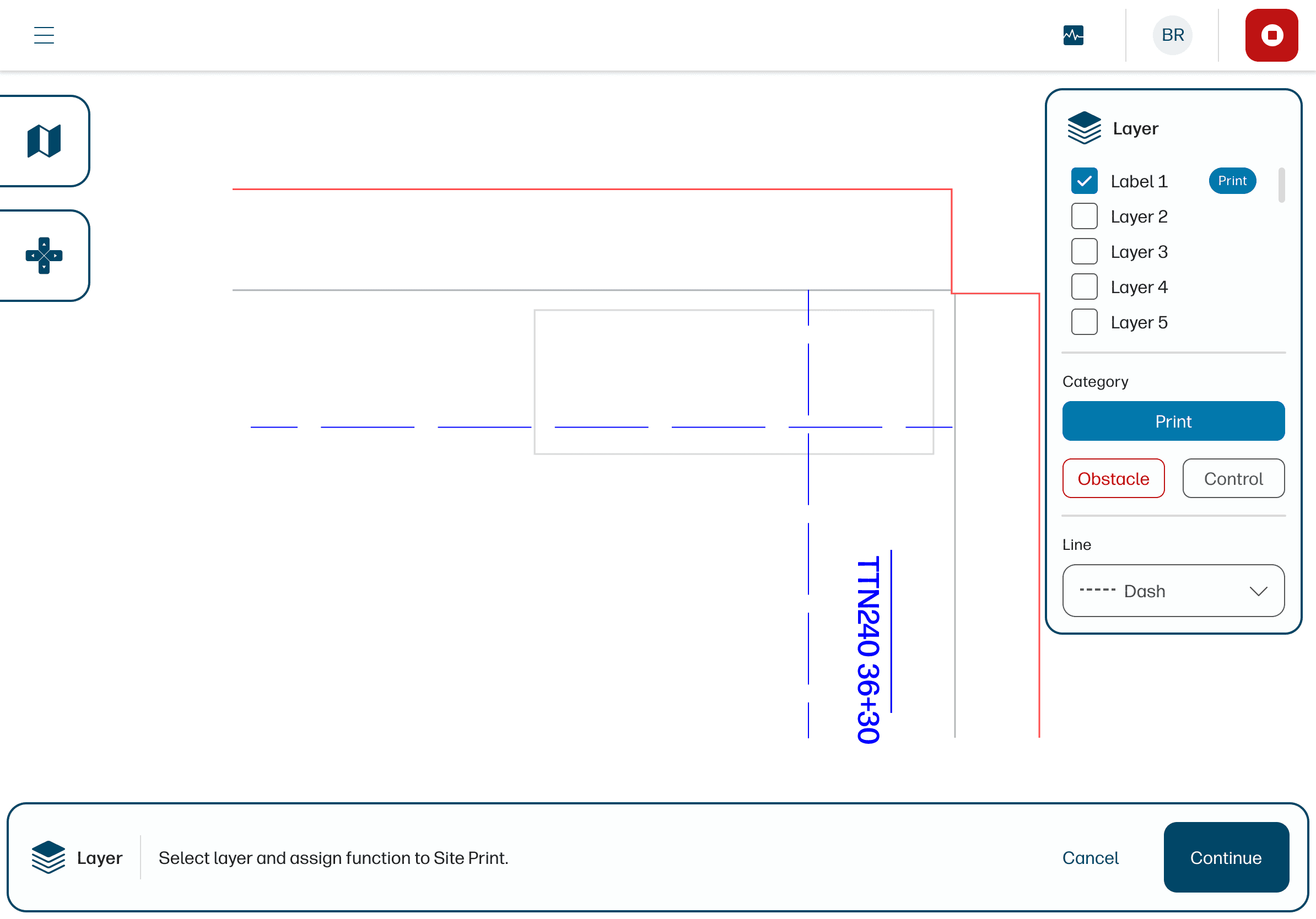
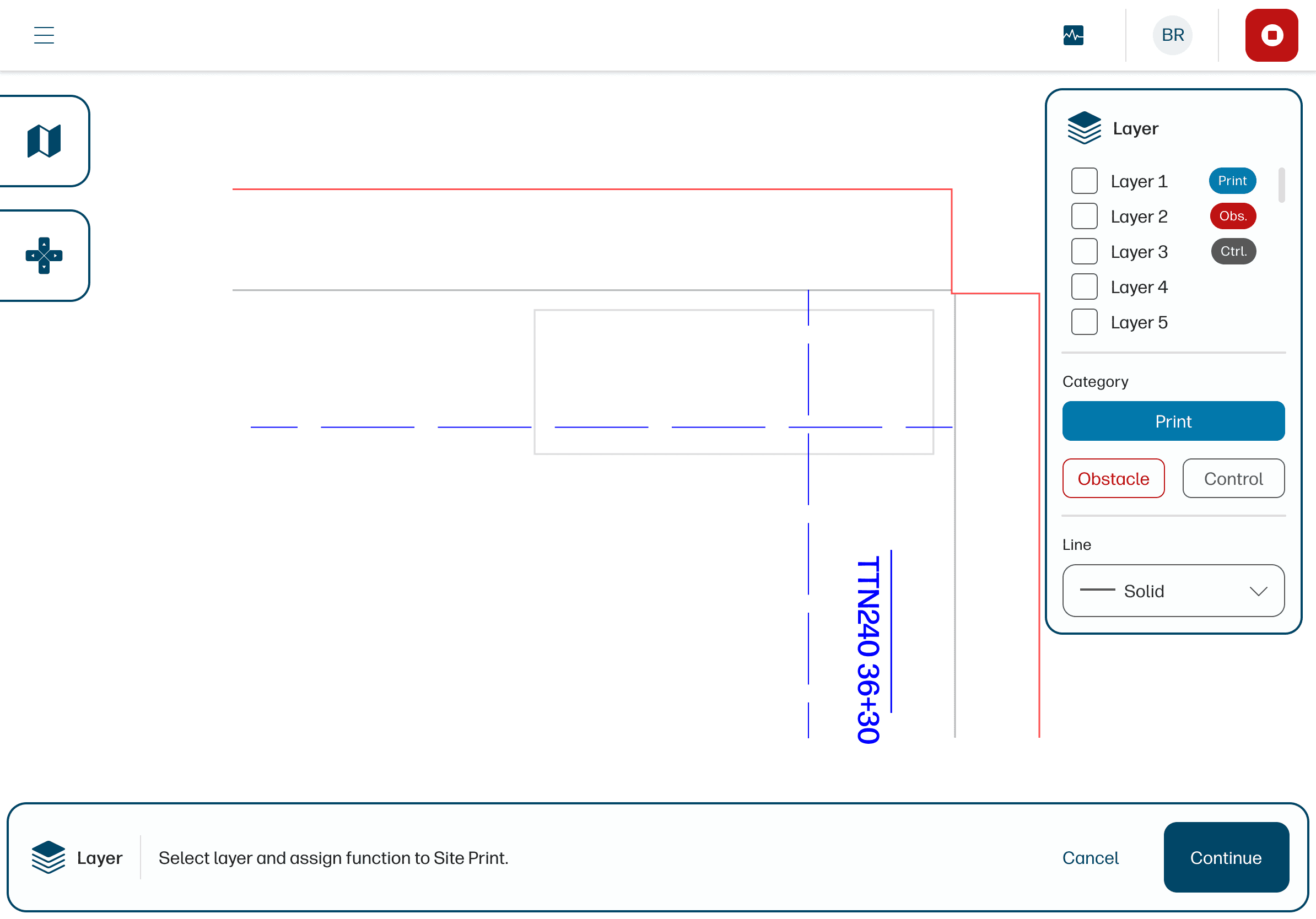
HP SitePrint Cloud
→ Service Platform
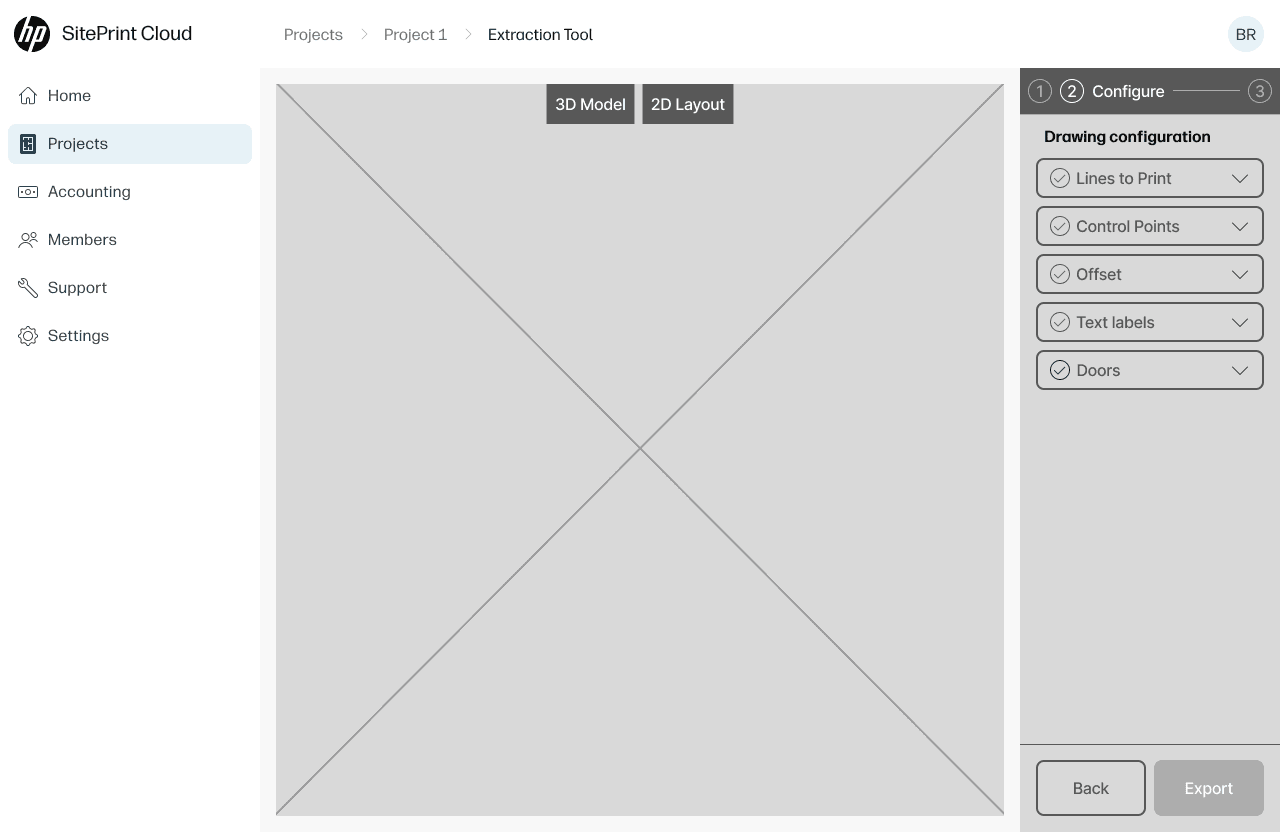
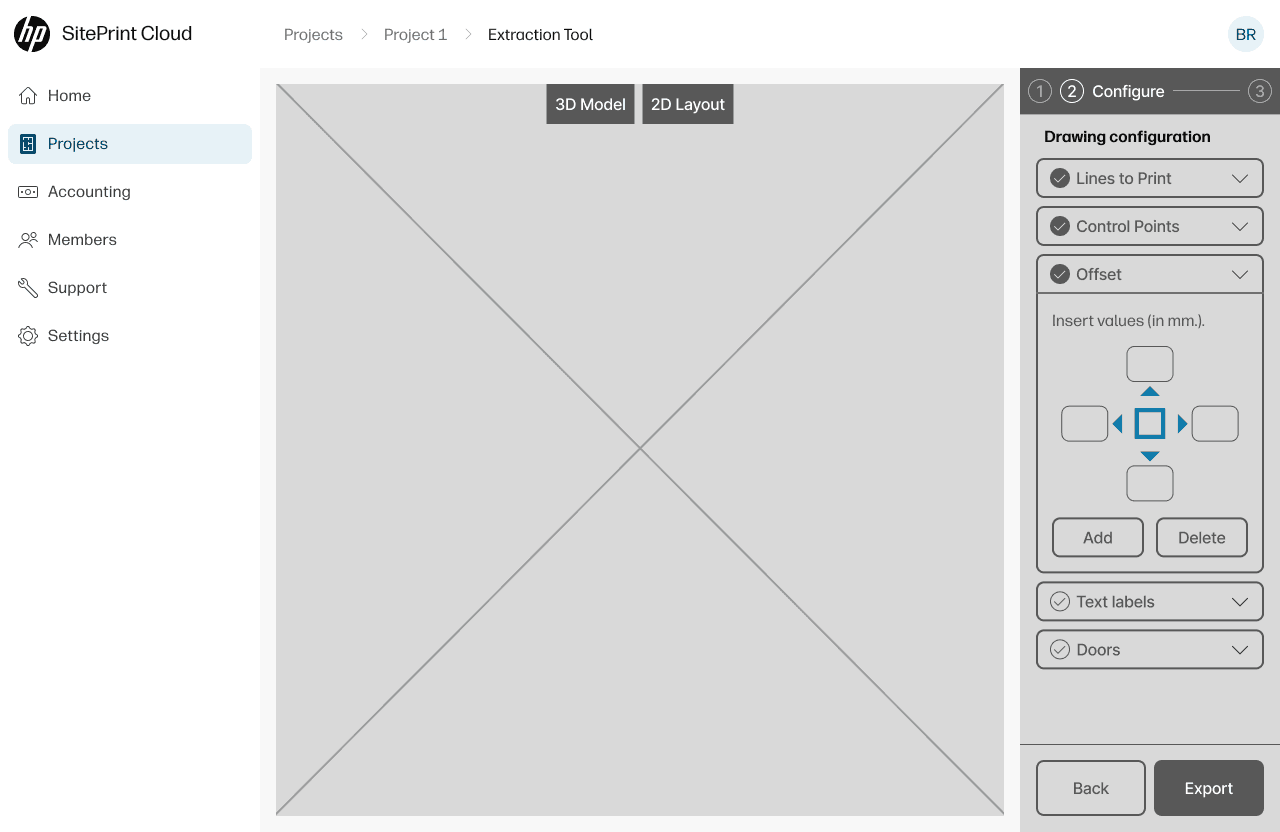
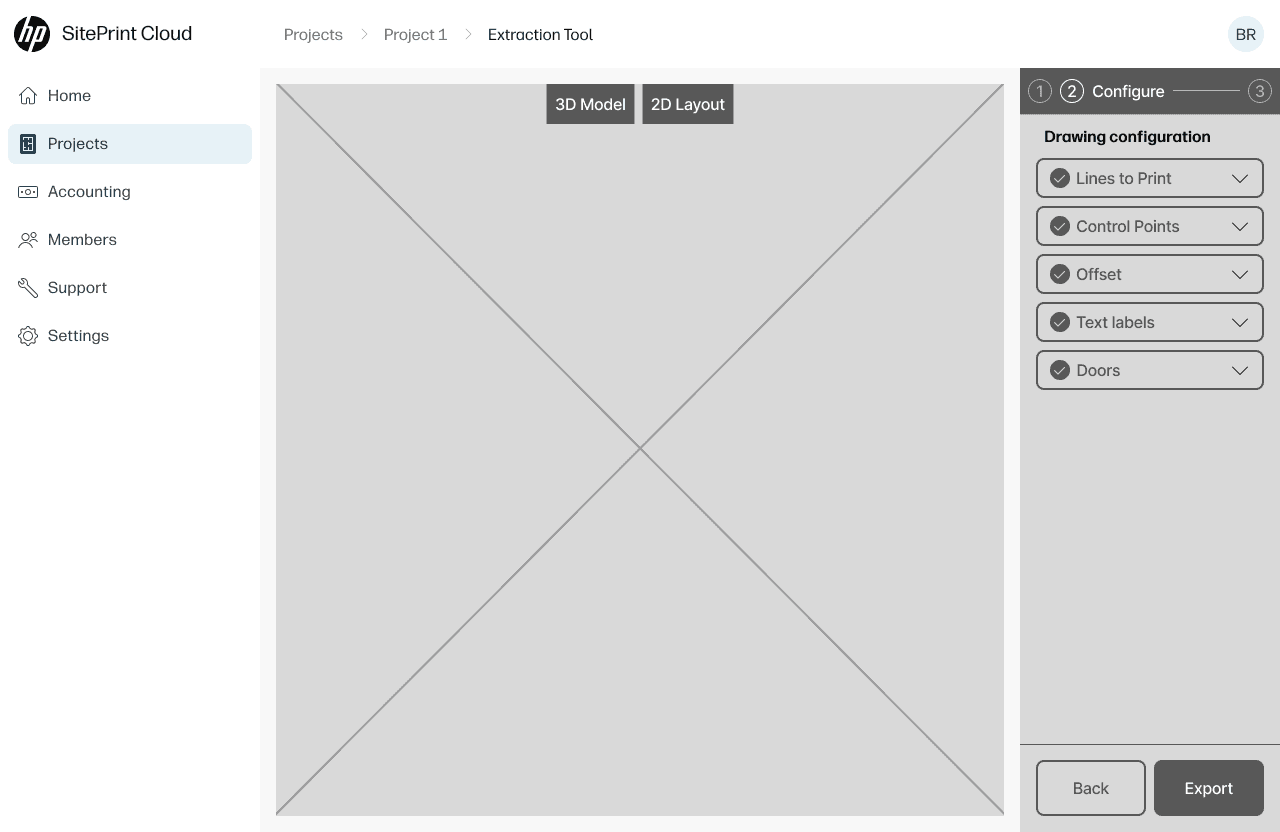
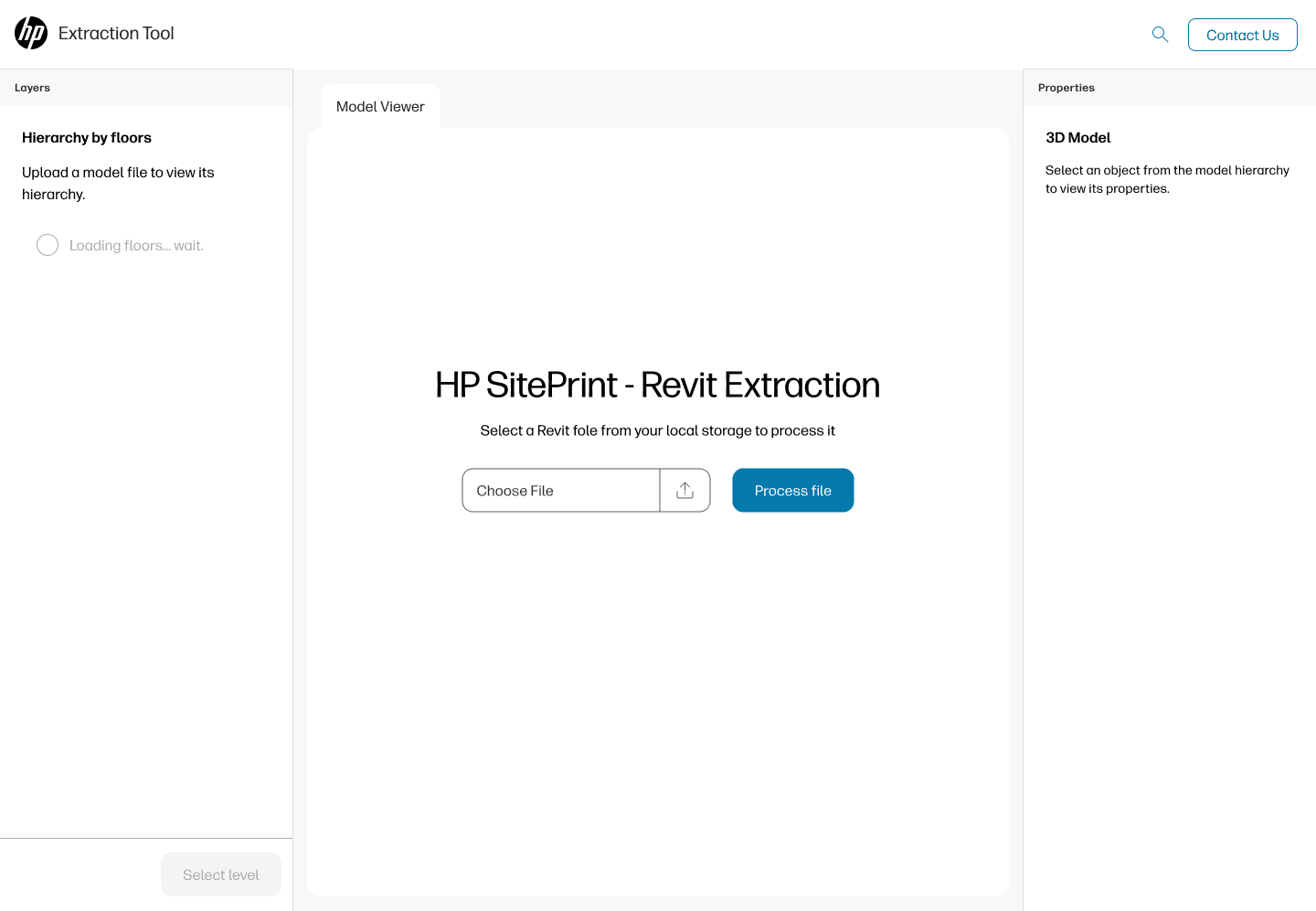
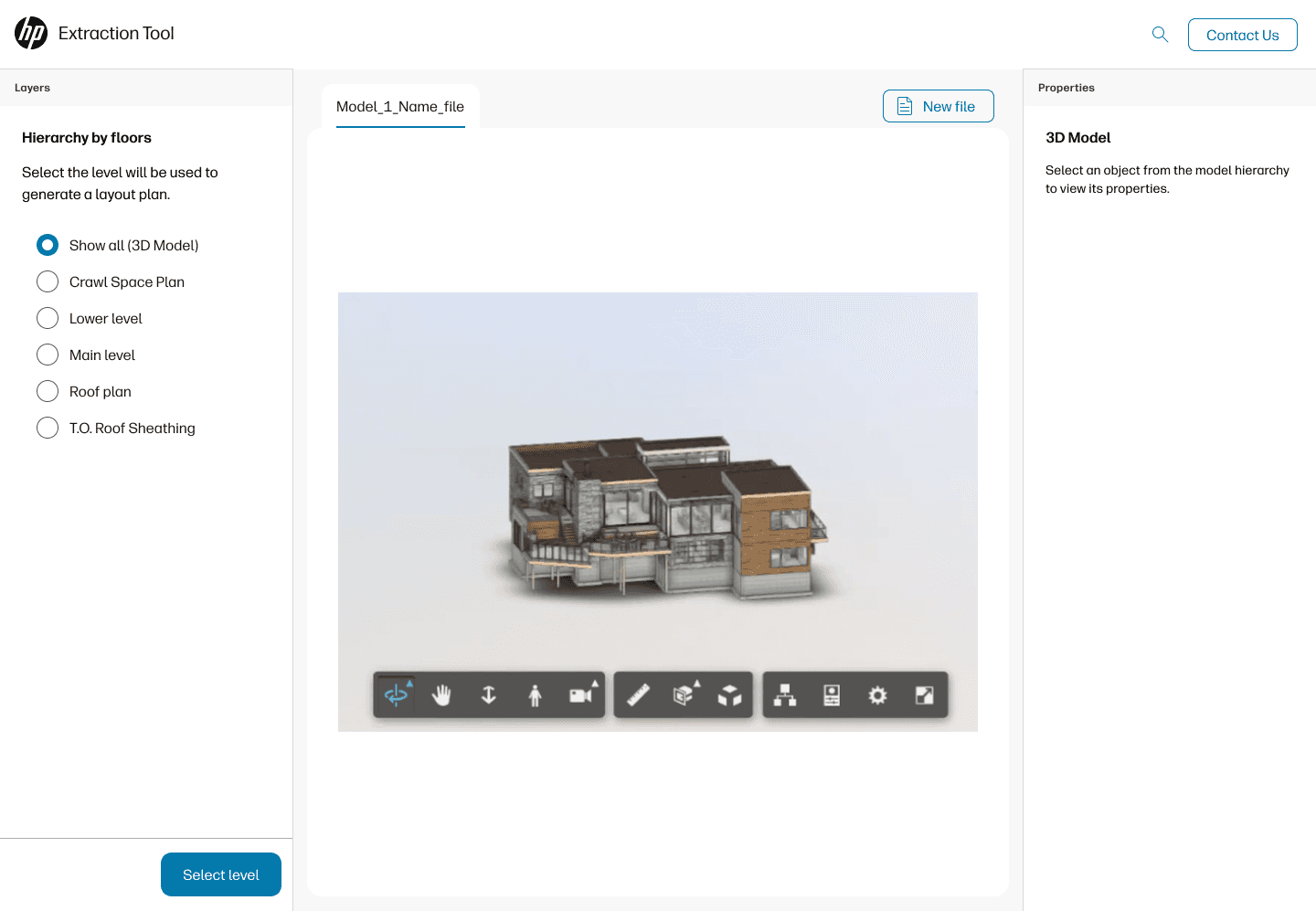
The Site Print Cloud, managing the entire service, involves designing features like user-specific dashboards, the Revit Plugin, and more.
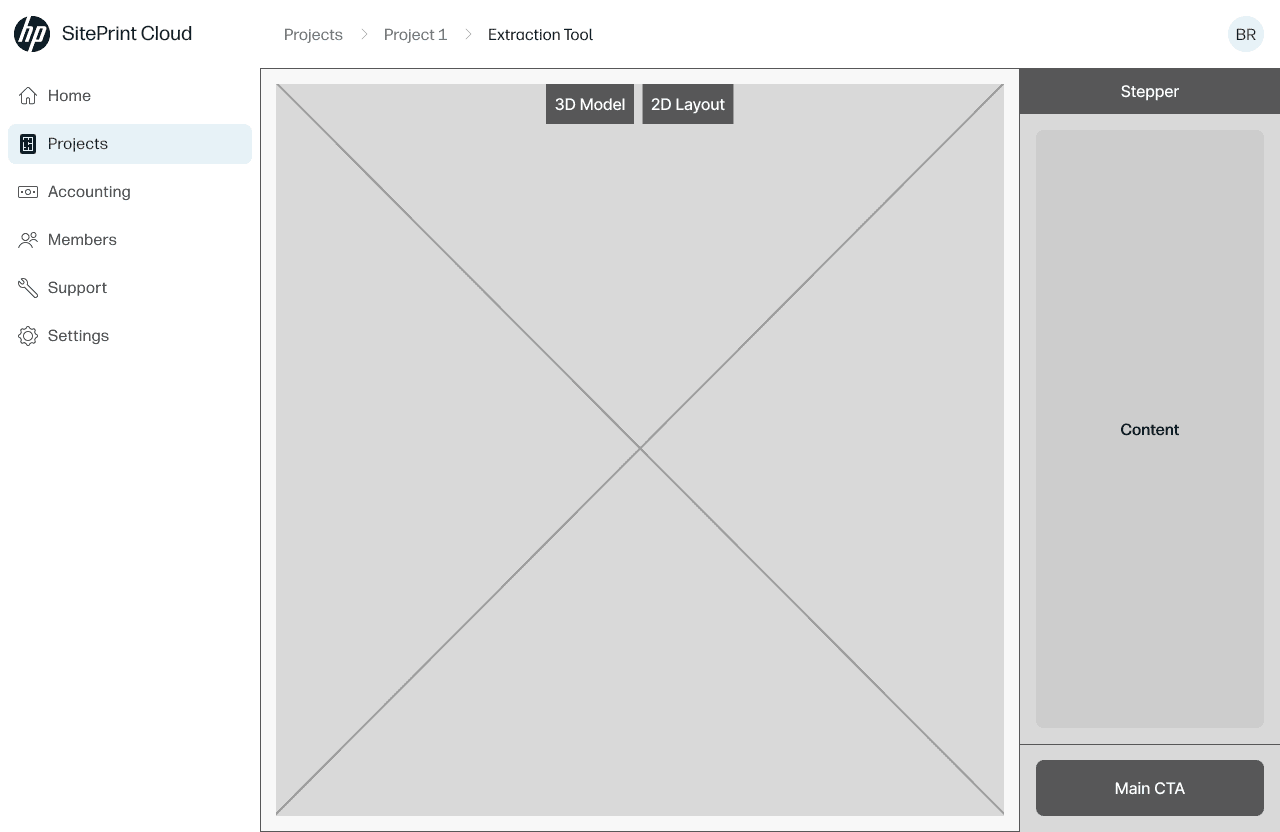
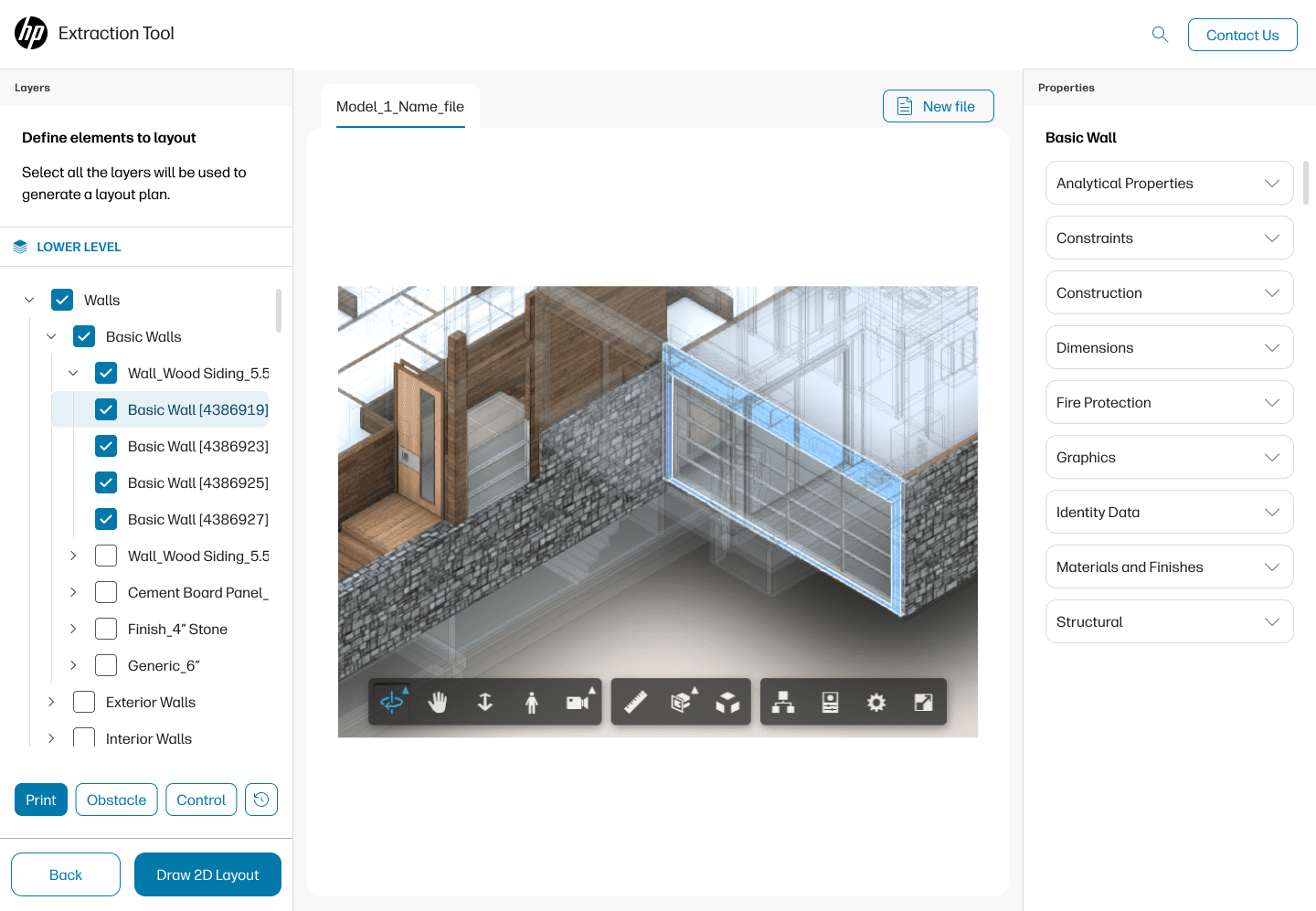
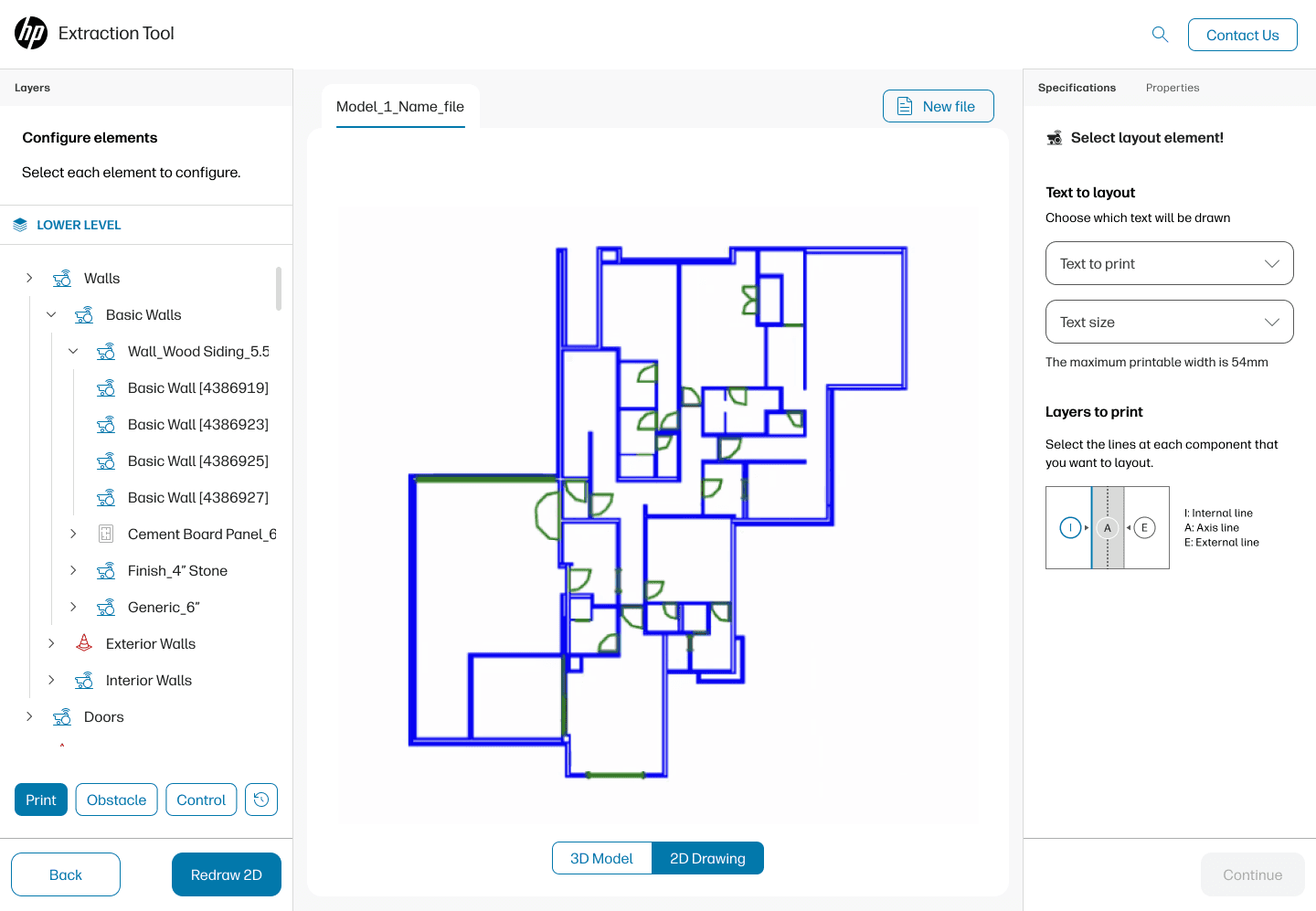
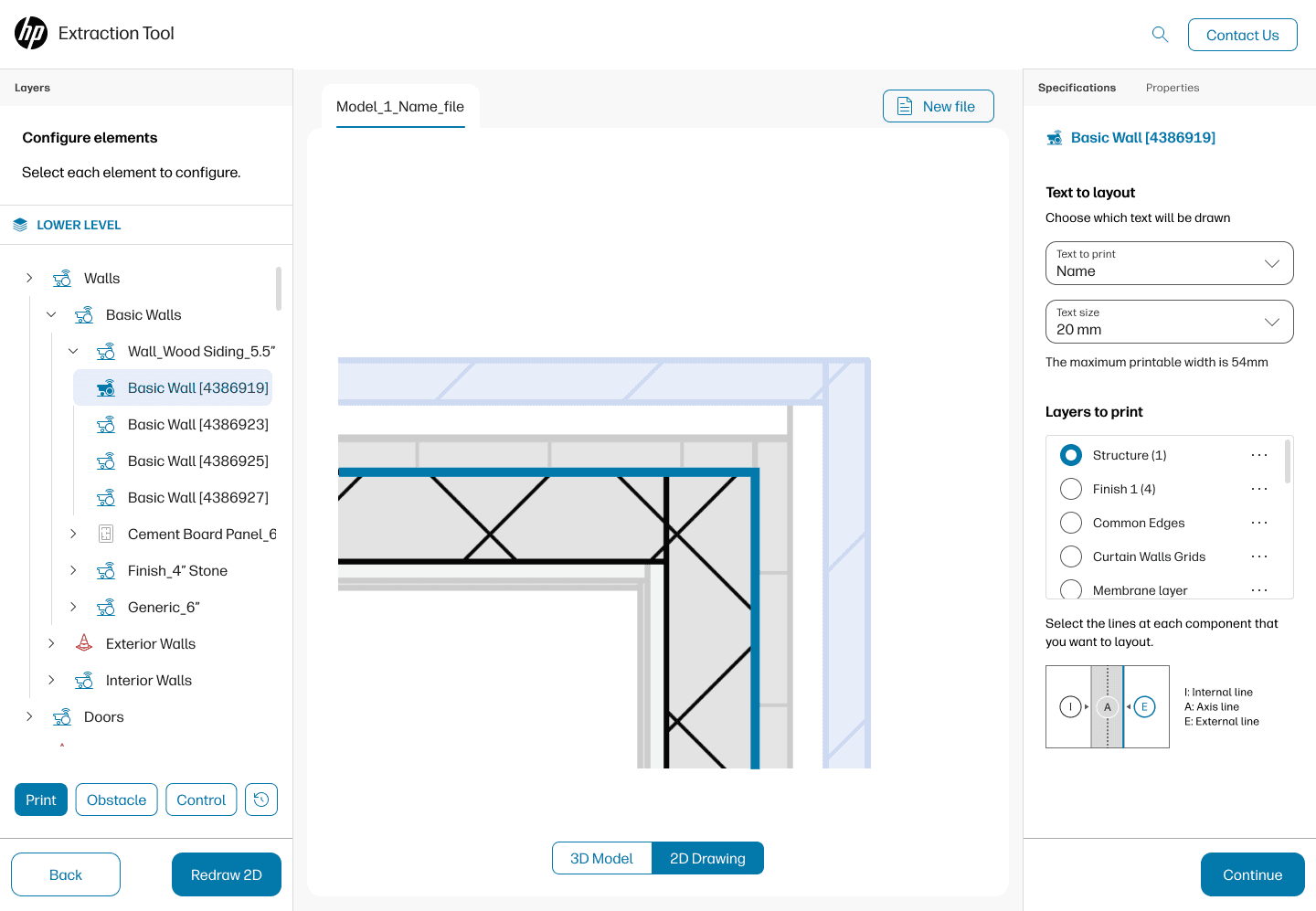
Scope & Constraints
The service is currently in its initial development phase, with the first release slated for later this year. Consequently, the focus lies on developing and enhancing key functionalities to ensure the service synchronizes seamlessly with cloud platforms and the robot control panel, meeting user needs.
6
months
Internship experienced
13
sprints
Agile accomplished
+23
Features designed
+52
Requirements solved
Lessons Learned
Theory vs. Designer's Reality: While design theories offer structured processes, real-world scenarios require proactive and resourceful problem-solving to tackle unexpected situations.
Designer's Role in Big Tech: Designers in this setting spend more time communicating, selling, and negotiating ideas than actual screen design.
Significance of Soft Skills: Thriving in such environments and standing out is often linked to high-level soft skills that help navigate diverse situations.
References:
Irene Pereira (2023). Universal Principles forma UX: 100 Timeless Strategies to Create Positive Interactions between People and Technology.
Jon Kolko (2011). Thoughts on Interaction Design: a collection of reflections / written and compiled by Jon Kolko (Second ed.).